



Welcome Message from Conference & Scientific Chairs

Driving the Transition to Renewable and CO₂-Free Energy 

The shift to renewable, carbon-neutral energy sources is both an economic and ecological imperative. Beyond generating electricity from renewables, we need solutions that can sustainably decarbonize the whole energy sector immediately and over the long term. 

A critical step toward this goal lies in innovative heating systems. However, technical advancements alone are not enough; market conditions must also evolve to support the transformation to a carbon free heat supply. Factors such as heating transition planning, building energy codes, zoning regulations, construction standards, subsidies, and public policies customs policies, and continued state support for coal, gas, and oil all influence the pace and direction of this transition. Transparency regarding performance, feasibility, and the interaction of individual components creates a comprehensive picture of potential solutions. 

For the electricity sector, resilience, flexibility, and international cooperation remain key challenges—across conversion, distribution, storage, and efficient utilization. 

Achieving sustainable solutions requires a methodical approach and fact-based dialogue within an innovation-driven ecosystem. All stakeholders must be engaged; only through collaboration can we seize this opportunity to strengthen our economic and societal future. 


Solar Energy: A Cornerstone of Sustainable Heating & Cooling  

Harnessing solar energy for heating is among the most efficient and environmentally friendly ways to meet thermal energy needs. When integrated with existing fossil-fuel systems, it can immediately reduce greenhouse gas emissions. Coupling solar thermal with heat pumps enhances local supply security, eases grid demand, and enables meaningful sector coupling—even beyond the fossil fuel phase-out. 

Integrating solar thermal into district heating networks, combined with excess power utilization and heat pumps for thermal storage management, offers a highly effective pathway to CO₂-free, grid-connected heating. Complementary technologies such as battery systems, hydrogen-based chemical storage, and water reservoirs complete a robust interregional storage strategy. 

In space-constrained areas, hybrid PVT (photovoltaic-thermal) collectors provide an efficient solution. Pairing these with heat pumps unlocks additional local benefits and accelerates the adoption of innovative systems. 

Solar Cooling, specifically in the Sunbelt regions requires design guidelines and better understanding of the specific climatic conditions along with further demonstration projects are needed to enhance the understanding and adoption of solar cooling applications. This growing market segment will make requires additional engagement to ensure that sustainable technologies are integrated appropriately and economically.  

Collaboration for Progress 

Our work creates a platform to share advancements in renewable heating, photovoltaics, energy storage, smart grid strategies, and more. By learning from one another and exploring new approaches, we can address the challenges of sustainable energy supply—even amid growing demand. The diversity of professionals, companies, and research institutions involved ensures a wealth of perspectives and insights. 

We are confident that these efforts will foster idea exchange and new partnerships. Together, we can leverage emerging technologies, materials, concepts, and intelligent systems to enhance efficiency, reliability, and market appeal. 

We extend our sincere gratitude to all contributors who share their research, experiences, and innovations. Your input is invaluable to our collective success. We encourage active participation—ask questions, engage in discussions, and exchange best practices. Through open dialogue, we can unlock our full potential. 


Looking Ahead to EuroSun2026 

EuroSun2026 in Freiburg, Germany will provides an exceptional setting for this collaborative endeavour, even more notable due to the landmark nature of this year for Eurosun, ISES and SHC.  

Finally, we express our heartfelt thanks to the organizing and scientific committees, theme chairs and all of those committed to making this edition of Eurosun another successful and impactful event.  Your dedication and hard work ensure that our collective efforts make a meaningful impact on the renewable energy sector! 

Dr. Lucio Mesquita, PhD - IEA SHC & Dr. Korbinian Kramer - Fraunhofer, ISE

EuroSun2026 Themes and Topics
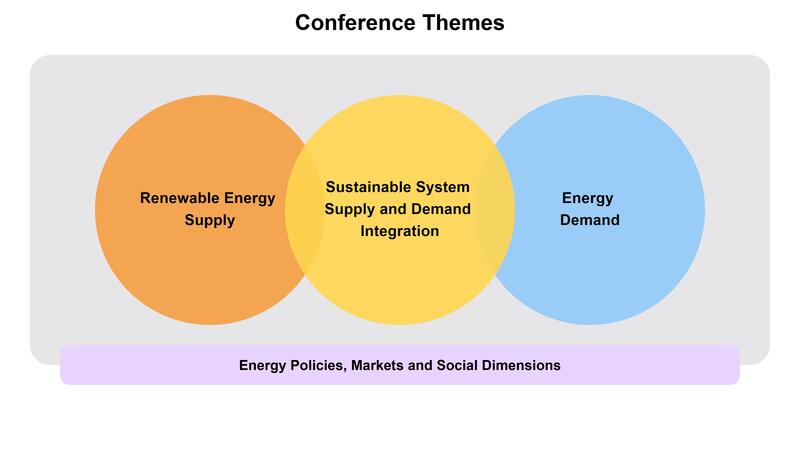
The EuroSun2026 conference Scientific Committee invite abstracts spanning the entire solar value chain, providing a platform to explore advancements, innovations, and emerging trends in solar energy. We welcome contributions across a broad range of areas, including solar technologies, applications and their end uses as well as policies, markets, and societal impacts. Submissions addressing innovative solutions, best practices, sustainability, and the role of solar and other renewables in shaping the clean energy transition are highly encouraged.

Please submit your Abstracts to the following themes:

  • Sustainable Heating and Cooling Systems for Buildings: Heat Pump Systems for Buildings, PV and PVT Systems, Solar Domestic Hot Water and Space Heating, Solar Energy and Heat Pumps, Sustainable Air Conditioning for Buildings, Smart Control Systems 
  • Sustainable and Efficient Districts: Innovative District Heating and Cooling, Urban Planning of Districts, Simulations, Digitalization and AI 
  • Sustainable Process Heat for Industry: High Temperature Heat Pumps for Industry, Solar Energy and Heat Pumps, Simulations, Digitalization and AI, Heat Recovery, Water Purification through Renewable Energy, Solar Fuels 
  • Energy Efficient Buildings: Solar and Efficient Buildings, Energetic Renovation of Buildings, Daylighting, Digitalization and Industrial Renovation 
  • Solar Air Conditioning and Refrigeration: Solar Cooling for the Sunbelt Region, Solar Refrigeration for Industry 
  • Sustainable Energy Infrastructure and Electrification: Sector Coupling and Grid Stabilization, Electrification of the Heating Sector, Thermal Energy Storage for Grid Integration of Renewable Energies, Power to X 
  • Electrical Energy Storage: Interaction of Storage Options, Sustainable Electricity Storage, Business models by Peak Load shifting and Tarif Flexibilization 
  • Thermal Energy Storage: Seasonal Thermal Energy Storage, Thermal Energy Storage in Applications, New Concepts in TES, Innovative Materials for TES, Energy Storage for Heat Pumps Source, Carnot Battery 
  • Solar Thermal and PVT Collectors and Solar Loop Components: Solar Thermal and PVT Collectors, Solar Loop Components, Testing and Certification 
  • Solar Resources and Energy Meteorology: Solar Resource Assessment, Solar Forecasting, Remote Sensing, Dynamic contracting 
  • Sustainable and Solar Energy Transition: Renewable Energy Strategies, Scenarios, Financing and Policies, Renewable Energy Education, Citizen Participation / Empowering Consumers, Carbon Neutral Regions, Sustainability and LCA